
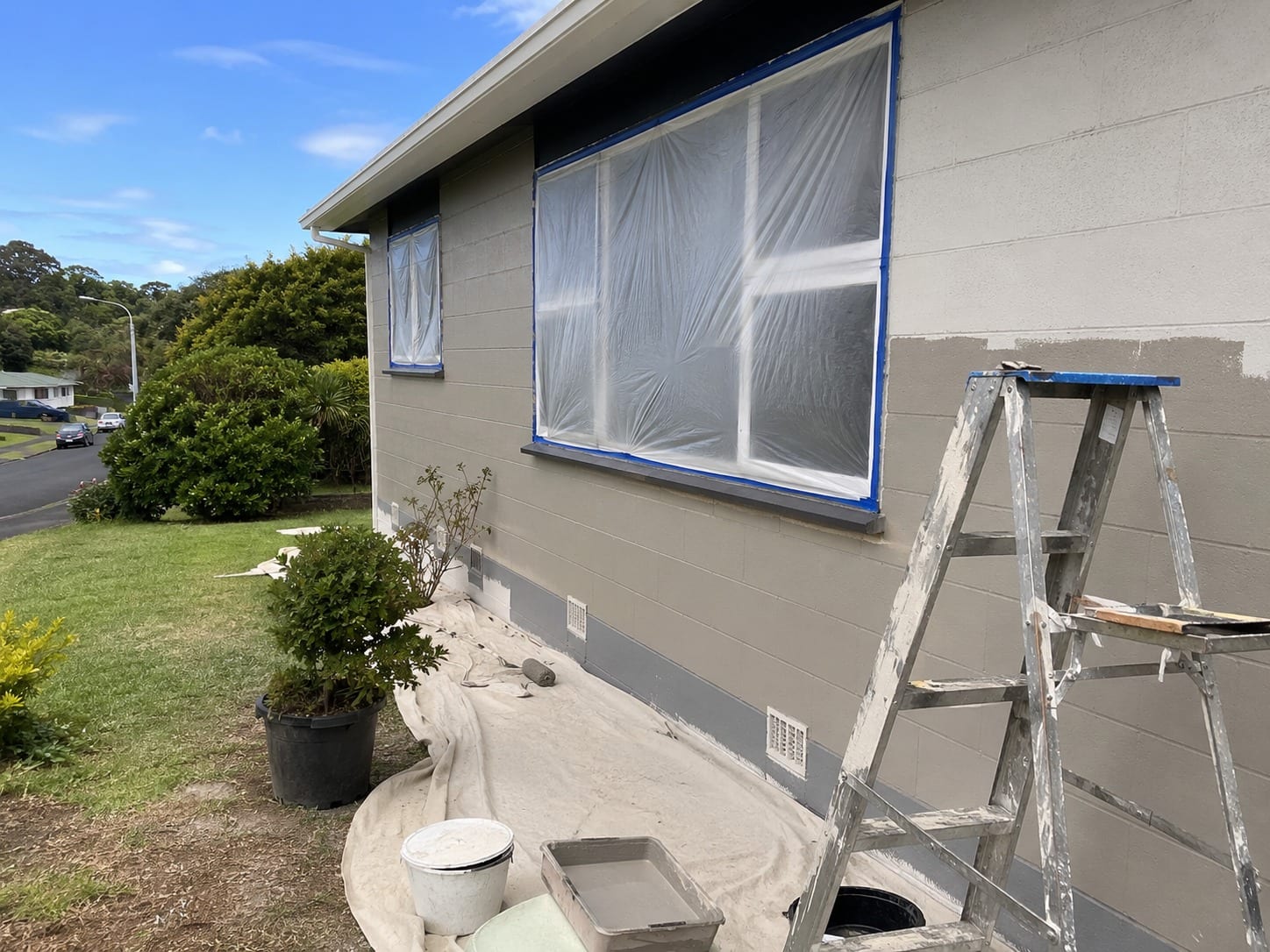
How often does a New Zealand home actually need repainting? Here is what affects your repaint cycle and the signs it is time.
Average repaint cycle for NZ homes
As a general rule, New Zealand homes need exterior repainting every 7–10 years and interior repainting every 5–10 years, though this varies significantly by location, cladding type, and paint quality used previously. Coastal and northern properties, including much of Whangārei, tend to sit at the shorter end of that range.
Roofs typically need repainting slightly less often than walls — often every 10–15 years — though this depends heavily on roof material and coastal exposure.
Signs it’s time to repaint
Key signs include chalking or a powdery residue on exterior surfaces, visible cracking, peeling, or bubbling paint, colour fading unevenly across different elevations, and any bare timber or rust showing through. Inside, signs include yellowing, staining, or paint that no longer wipes clean.
Catching these signs early — rather than waiting for widespread failure — means less prep work and a cheaper repaint overall, since the underlying surface hasn’t had time to deteriorate further.
How climate affects repaint frequency
Homes in coastal or high-UV areas, like much of Northland, generally need repainting more often than those in cooler, drier, inland regions, simply because salt air, humidity, and stronger sun all accelerate paint breakdown. Homes surrounded by heavy shade or damp bush can face different challenges — mould and moss growth rather than UV fading.
Wind exposure matters too — a site that cops constant salt-laden wind will show wear faster than a similar home just a few streets back, sheltered by other buildings or hills.
Repaint cycles by cladding type
Weatherboard and timber cladding generally need repainting every 6–8 years, as timber moves with humidity and needs a flexible paint film to keep protecting it. Fibre-cement and modern composite claddings tend to hold paint longer, often 8–12 years, due to more stable, less porous surfaces.
Brick and masonry, if painted, can often go 10+ years between coats, while previously unpainted brick doesn’t need painting at all unless you’re changing its look.
How regular maintenance extends paint life
Simple maintenance — washing down exterior surfaces once or twice a year to remove salt, dirt, and mould buildup, and touching up small areas of wear as soon as they appear — can meaningfully extend the interval between full repaints. Trimming back vegetation that touches the house also reduces trapped moisture and abrasion damage.
A quick annual walk-around to spot early cracking, peeling, or rust before it spreads means smaller, cheaper fixes now instead of a full repaint being forced sooner than it should be.
Pro Painters Whangarei can assess where your home sits in its repaint cycle — as local Whangarei painters, we see this daily across Northland. We offer exterior painting, roof painting, interior painting, and paint stripping for older, flaking surfaces, for homes across Northland. Learn more about our team, or contact us for a free assessment.